Donation kiosks for pet shops · Türkiye
Meet the street dog who looks like you.
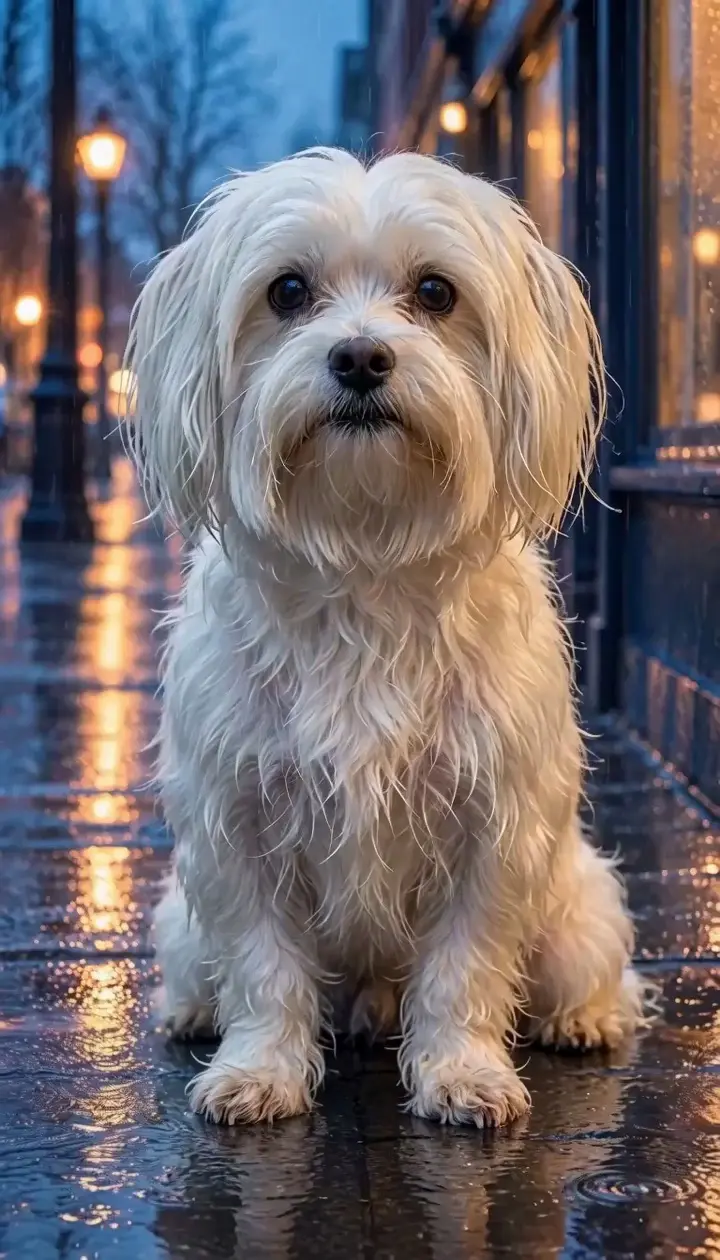
PawSelf is a kiosk that stands in a pet shop. A visitor takes one photo, and about a minute later they are watching a street dog carrying their own face wait out the rain. Then a QR code turns that minute of recognition into a donation.
Raspberry Pi 4 · 720×1280 portrait touch panel
The problem
People who love animals still walk past the donation box.
A pet shop is full of people who have already chosen to care about animals. Most of them still walk past the plastic box at the counter. Not because they are indifferent — because a box is an abstraction, and you cannot make someone feel millions of street animals in the five seconds they spend at a till.
PawSelf replaces the abstraction with one specific dog. Not a dog in general: the one with the visitor's own eyes, sitting in the rain, looking back at them.
The catalogue
Eighteen dogs, one rainy street, filmed once.
Every scene is produced ahead of time and shared by every visitor. Only the face is new. An appearance model picks which of the eighteen a visitor becomes, so the match is argued from their features rather than left to chance.
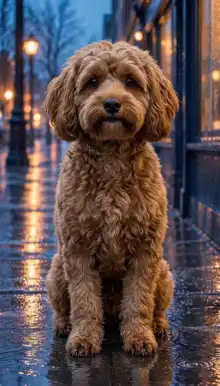
Cavapoo 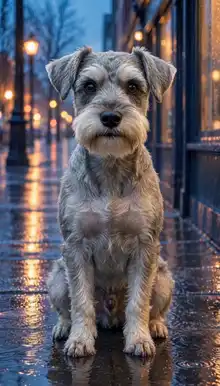
Schnauzer 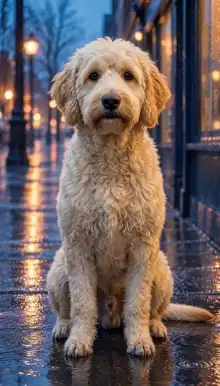
Goldendoodle 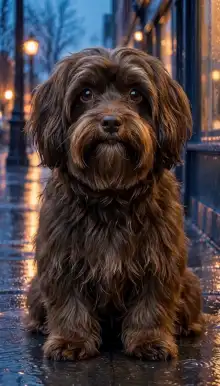
Havanese 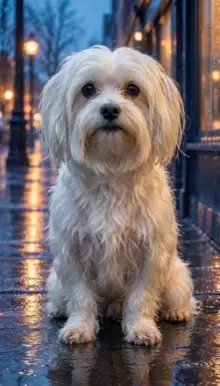
Maltese 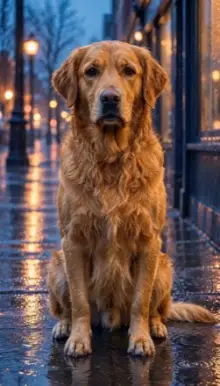
Golden Retriever 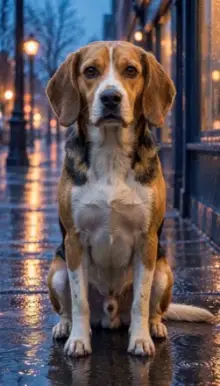
Beagle 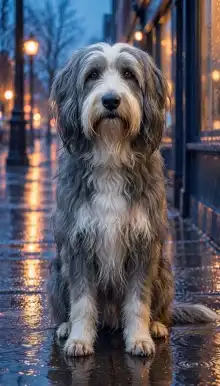
Bearded Collie 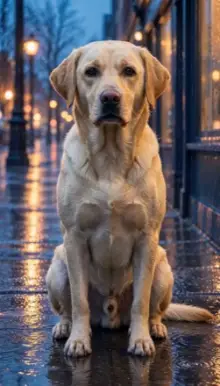
Labrador 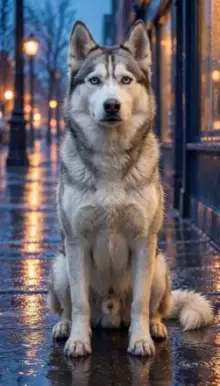
Husky 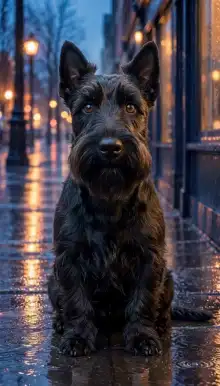
Scottish Terrier 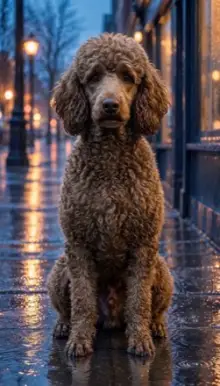
Poodle 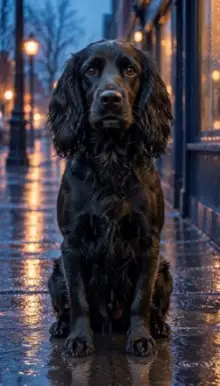
Spaniel 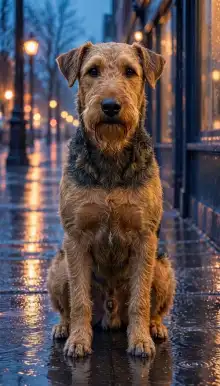
Airedale Terrier 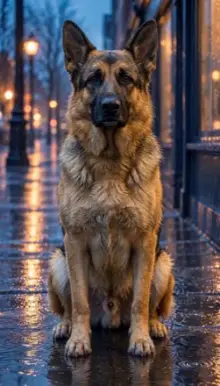
German Shepherd 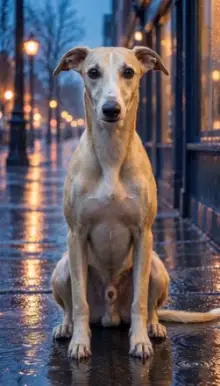
Whippet 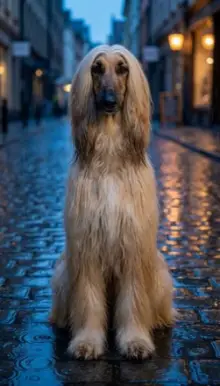
Afghan Hound 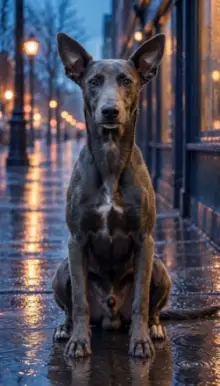
Prick-ear
How it works
Five steps, about one minute, no operator.
This is the whole visitor flow as it runs today on the pilot device.
- 01
The photo
The visitor consents on screen, and the kiosk camera takes a single photo. It is never written to the device as a file.
- 02
The match
An appearance model reads face proportions, hair direction and beard, then ranks the eighteen dogs. Geometry only breaks ties, and a genuinely ambiguous read is recorded rather than guessed.
- 03
The portrait
Google's Gemini image model — Nano Banana Pro, served through Fal — draws that dog carrying the visitor's features. One image, $0.15, metered by our own broker.
- 04
The film
The kiosk's own CPU composites the portrait into three pre-made scenes — rain, relief, hope — frame by frame, using a motion map computed once per dog. Median 10 seconds. No GPU on site, no video in the cloud.
- 05
The ask
The screen shows a QR code. The visitor's phone opens the support page, and when support completes the scene on the kiosk moves on — the rain stops for the dog they just met.
Where it stands
Built and measured. Not yet taking real donations.
The pilot device is a Raspberry Pi 4 with a 720×1280 portrait touch panel. Fleet management, telemetry, remote update and rollback are live, and the operator panel shows the state of every kiosk.
The support step is a working demo, not a payment. Turkish law 2860 requires a licensed partner to collect donations, so real money will move through an animal charity's own infrastructure. That partnership and the first two-week unattended pilot in a pet shop are the next two milestones.
Technology
Expensive work happens once. Per visitor, almost nothing does.
One architectural rule carries the product: anything costly — the films, the motion maps, the scene production — is done once, up front. What runs per visitor is a single image generation and the device's own processor.
Google Cloud
Firebase Hosting serves this site, the operator panel and the phone page as a static export. Cloud Functions carry the fleet API, telemetry, phone sessions and the metered generation broker; Firestore holds device, dealer and session state.
Gemini image generation
One portrait per visitor through Nano Banana Pro. The provider key never reaches the device: the broker signs, meters and caps every call, and a restart never re-charges a job.
Compositing on the device
Python and OpenCV on the Pi's CPU build three videos from the portrait. The motion map is computed once per dog and verified frame by frame before it ships.
Tolerant of a bad night
If the connection drops, the kiosk keeps running on ready-made scenes and a local QR, and queues its telemetry. The visitor still reaches the support step; the donation path is never the thing that breaks.
Privacy
One photo, one purpose, no archive.
The kiosk asks before the camera is used, in plain language, and the flow completes without personalisation if the visitor declines.
Nothing is kept
The photo is sent for generation and is never stored as a file on the device. No name, no email, no account. The phone session reports two facts — page opened, support completed — and closes after five minutes.
What we disclose
The image model runs abroad, so the photo does leave the country. That transfer is stated on the consent screen, and its KVKK assessment is open work we are doing before any field pilot — not a solved problem we are claiming.
Contact
We are looking for two partners.
An animal charity to receive the donations, and pet shops willing to host the first kiosks. A kiosk costs roughly $150 in hardware, once. PawSelf keeps neither the money nor the photos.
- onur@pawself.com
- Founder
- Onur Bultan
- Live operator panel
- pawself.com/admin/devices